As a parent, former primary school teacher and private tutor, I know just how daunting Year 6 can feel.
Not only are you preparing for your child’s move to secondary school but SATs can appear to dominate the whole year too.
You may be wondering what you can do to ease the pressure and what the results will actually mean for your child.
What tests will my child take at the end of Year 6?
The Standard Assessment Tests (SATs), officially known as the Key Stage 2 national curriculum tests, are statutory assessments that usually take place in the middle of May each year.
They comprise the following test papers:
- English grammar and punctuation – 45 mins
- English spelling – approximately 20 mins
- English reading comprehension – 60 mins
- Maths Paper 1: arithmetic – 30 mins
- Maths Papers 2 and 3: reasoning – 40 mins each
Writing is assessed separately through teacher assessment rather than a SATs paper.
What’s the purpose of SATs?
The main purpose of SATs is to collect national data for pupil attainment at the end of primary school. The results contribute to how the performance of schools and different groups of pupils is measured and compared.
SATs results form one part of attainment data when Ofsted evaluates a school’s effectiveness alongside inspections, interviews, observations and other information relating to school performance.
Because SATs results form a significant part of school accountability measures, staff can understandably feel under pressure to achieve positive results. Unfortunately, children can sometimes sense this pressure too.
At secondary school, pupils’ GCSE outcomes may also be compared with their prior attainment at the end of Key Stage 2 when evaluating the progress made by a school or cohort.
However, it is important to remember:
SATs scores do not define your child or cap your child’s potential.
What impact does my child’s Year 6 SATs score have?
You may be surprised to hear that SATs scores are not quite as crucial to your child’s overall learning, progress and attainment as you may think. They can dominate conversations and the school curriculum, making them appear more influential than they really are.
SATs scores are passed to your child’s secondary school as part of the transition process but they are not the only information shared. Primary schools also provide teacher assessments and transition information to give a more rounded picture of each child’s strengths and learning needs.
SATs scores alone do not usually determine your child’s classes at secondary school. Schools have different approaches: some will group children randomly into form groups for the first half term to let children settle in before making an assessment and regrouping. Some schools will conduct a further assessment in the first few weeks (CAT4) in order to ascertain a baseline score and some will use primary transition information to group their children accordingly.
A SATs result is a snapshot of how your child performed in a particular test at a particular time. It has a purpose but cannot fully represent your child’s level of understanding, confidence, progress or potential.
How can I support my child with Maths at home?
You do not need to recreate school lessons, a revision timetable or spend hours working through practice papers at home. Short, regular activities that strengthen your child’s understanding of mathematical concepts are often far more valuable.
You may be surprised by how many opportunities there are to use Year 6 Maths in everyday life.
Here are some suggestions that can really help your child with their progress and confidence in Maths:
- Practise times tables and related division facts
- Involve your child in measuring ingredients, reading scales and planning DIY projects or crafting
- Talk about time when planning events, appointments or holidays:
- How long is it until we need to leave?
- What time should we set off?
- How long will the journey take?
- Explore prices and quantities when shopping:
- How much will it cost altogether?
- Which product offers the best value?
- How much will the quantity we need cost?
Word problems are often among the SATs questions children find most challenging because they struggle to relate to the context and then need to identify the Maths hidden within the scenario.
Many of these questions involve scenarios that adults encounter in everyday life.
Real-life experiences give children useful contexts to draw upon and help them build strong mathematical foundations. Time spent practising the basics in real life makes Maths more relatable and helps them form strong foundations for GCSE Maths and beyond.
I am not an advocate of repeatedly teaching to the test. However, I do use selected practice papers to help pupils become familiar with the layout, vocabulary and style of SATs to reduce their anxiety towards the test.
The most important practice focuses on addressing gaps in understanding. If you’re not sure what topics are covered in Maths at Year 6, I have a free parent guide that you can download.
Happy Hedgehog Tip
If your child is finding times tables tricky, this is an area where regular support at home can make a considerable difference.
Secure multiplication facts make many Year 6 calculations and concepts – division, fractions, percentages, ratio and area – feel much more manageable.
Would you like a clearer overview of Year 6 Maths topics?
Download my free Supporting your Child with Maths in Year 6 guide for a straightforward overview of the curriculum, SATs and more ways to help your child at home.
What’s Next
Read my related blog posts:
- Why are Times Tables so important? (How do they build Maths confidence)
- How to Multiply by 10, 100 and 1000 (Without Adding Zeros)
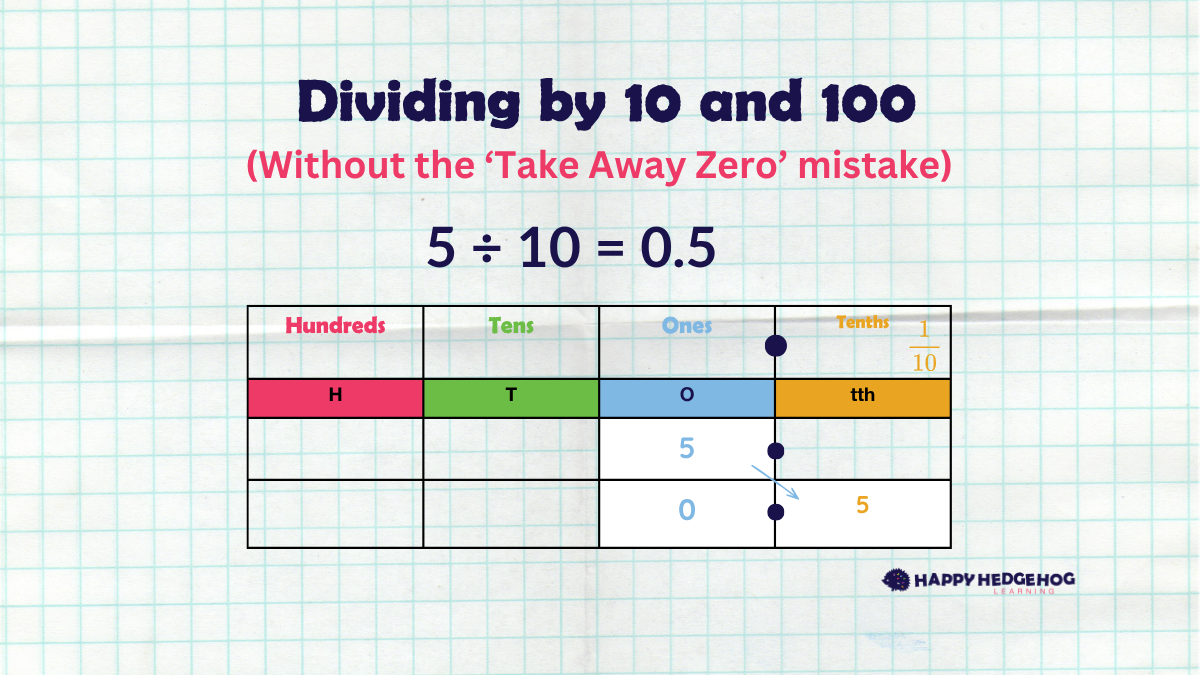
- Dividing by 10, 100 and 1000 (Without the ‘Take Away a Zero’ Mistake)
If you found this blog helpful:
- Join my email list for fortnightly Maths tips and resources.
- Download my free parent guide: Supporting Your Child with Maths in Year 6.
- Find out about my Year 6 Maths Club.
- Explore more parent-friendly Maths guides on the blog.
Have fun learning together